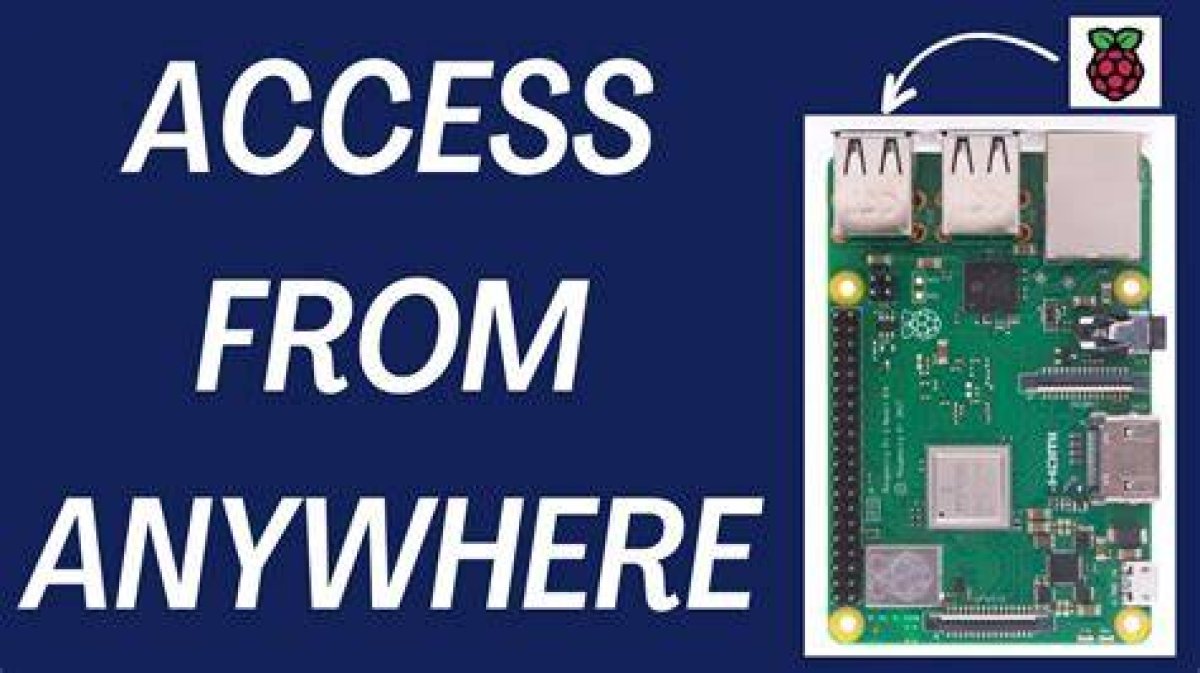
Remotely accessing a Raspberry Pi for remote IoT projects is a powerful solution that opens up endless possibilities for developers and hobbyists alike. Whether you're managing home automation systems, monitoring environmental data, or controlling smart devices, having the ability to access your Raspberry Pi remotely can significantly enhance productivity. This guide will walk you through the process step by step, ensuring you can set up a secure and efficient remote connection without any unnecessary costs.
In today's interconnected world, IoT (Internet of Things) has become a cornerstone of modern technology. From smart homes to industrial applications, IoT devices are revolutionizing how we interact with the world around us. The Raspberry Pi, a versatile single-board computer, plays a crucial role in this ecosystem, offering an affordable and flexible platform for building IoT solutions.
This article will provide you with a comprehensive understanding of how to remotely access your Raspberry Pi for IoT projects. We'll cover essential tools, security measures, and step-by-step instructions to ensure your setup is both functional and secure. Let's dive in!
Raspberry Pi Overview
The Raspberry Pi is a compact and affordable single-board computer designed to promote the teaching of basic computer science in schools and developing countries. However, its versatility has made it a favorite among hobbyists, makers, and professionals alike. With its small form factor, GPIO pins, and support for various operating systems, the Raspberry Pi is ideal for IoT projects.
Key Features of Raspberry Pi
- Compact and lightweight design
- GPIO pins for interfacing with sensors and actuators
- Support for multiple operating systems, including Linux-based distributions
- Low power consumption
- Affordable price point
These features make the Raspberry Pi a perfect candidate for remote IoT projects, where you need a reliable and efficient device to manage tasks remotely.
Why Remote Access Matters
Remote access to your Raspberry Pi is essential for several reasons. First, it allows you to manage and monitor your IoT devices without being physically present. This is particularly useful if your Raspberry Pi is deployed in a remote location, such as a weather station or a farm. Second, remote access enables you to troubleshoot and update your system from anywhere in the world, saving time and resources.
Benefits of Remote Access
- Increased flexibility and convenience
- Reduced downtime and faster troubleshooting
- Improved security through centralized management
- Enhanced scalability for large-scale IoT deployments
By setting up remote access, you can ensure that your Raspberry Pi remains accessible and functional, regardless of your location.

